

Table of Contents
- Why Meditation Cushions Matter for Long Sessions
- How to Sit Comfortably During Meditation
- Meditation Cushion Comparison Table
- The Earth Moon Bundle: Complete Support for Extended Practice
- The Cloud: Portable Meditation Support for Travel and Studios
- Zafu vs Zabuton for Long Sessions
- Meditation Cushion for Back Pain and Spinal Alignment
- How We Selected These Cushions
- Frequently Asked Questions
Last Updated: September 30, 2026
Why Meditation Cushions Matter for Long Sessions
A meditation cushion long sessions demand more from your body than casual practice. After 20 minutes of sitting without proper support, your hips tilt backward, your spine rounds, and discomfort becomes distraction.
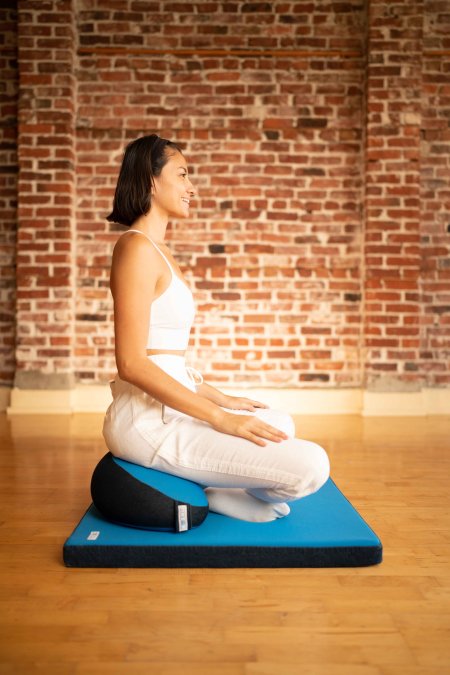
A meditation cushion for long sessions solves this problem by elevating your hips above your knees.
How to Sit Comfortably During Meditation
Comfort during meditation is about alignment. Your spine should form a gentle S-curve, your hips should sit higher than your knees, and your ankles should rest on a supportive surface.
Anatomical Fit by Body Type
- Tight hips and limited flexibility: If you cannot comfortably cross your legs without your knees floating significantly above the ground, you need 5 to 6 inches of elevation and a wider, crescent-shaped cushion that supports your thighs. Round cushions may feel unstable because your legs don't rest evenly on the surface.
- Moderate flexibility: Most practitioners fall here. A 4 to 5-inch round or crescent cushion paired with a 2-inch base cushion works well. Your knees should rest 2 to 4 inches below hip level.
- High flexibility (lotus or half-lotus postures): If you practice lotus comfortably, a 4-inch zafu alone may suffice, though a zabuton underneath still reduces ankle and shin pressure during extended sessions.
- Taller practitioners (over 5'10"): Standard cushion heights (4 to 6 inches) may not provide enough elevation relative to your leg length. You may need to stack a zafu on top of a zabuton, creating 6 to 8 inches of total elevation, or choose a taller cushion variant.
- Shorter practitioners (under 5'4"): A 4-inch cushion is often sufficient; a 6-inch cushion may elevate your hips too high and create an unstable forward tilt.
Meditation Cushion Comparison Table
| Cushion Type | Height | Best For | Key Benefit | Price Range |
|---|---|---|---|---|
| Zafu (round) | 4-6 inches | Lotus and cross-legged postures | Hip elevation and spinal support | $70-$135 |
| Zabuton (base) | 2 inches | Knee and ankle support | Reduces joint pressure | $80-$135 |
| Crescent | 5 inches | Wider leg postures | Hip and thigh comfort | $70-$135 |
| Mobile set (The Cloud) | 3-5 inches combined | Travel and studios | Portability with full support | $250 |
The Earth Moon Bundle: Complete Support for Extended Practice
The Earth Moon Bundle ($135.00) pairs two complementary cushions for long sessions. The Earth base cushion (28 inches square, 2 inches high) elevates your knees and ankles with premium high-resiliency foam. The crescent-shaped Moon cushion (5 inches high) cradles your hips and thighs with buckwheat hulls that mold to your body. Together, they create a stable, ergonomic seat supporting cross-legged to wider leg positions.


The Cloud: Portable Meditation Support for Travel and Studios
The Cloud ($250.00) is the world's only mobile meditation cushion set, weighing 5.7 pounds and folding flat for travel. It consists of a foldable Earth base cushion and a Cloud Seat cushion (3 inches high, filled with lightweight memory foam and closed-cell foam composite). When folded, the Earth base includes pockets for the Cloud Seat and personal items, plus a shoulder strap for transport.
Zafu vs Zabuton for Long Sessions
A zafu is a round cushion (4 to 6 inches high) that elevates your hips. A zabuton is a rectangular base cushion (2 inches high) that supports your knees and ankles. Using both together distributes your weight across a larger surface area, reducing localized pressure points during long sessions.
Meditation Cushion for Back Pain and Spinal Alignment
Back pain during meditation usually signals one of two problems: your hips are too low, or your cushion is too soft and collapses under your weight. When your hips sit lower than your knees, your spine curves into a C-shape, compressing your lower back. Most practitioners need 4 to 6 inches of elevation to restore proper spinal alignment.
Material Durability and Long-Term Compression
-
Buckwheat hulls: Buckwheat-filled cushions maintain their height and firmness longer than foam alternatives. They gradually settle over 12 to 18 months of daily use, typically losing 0.5 to 1 inch of height. Refreshing the cushion by redistributing the hulls every 6 to 12 months extends their lifespan significantly.
-
High-resiliency (HR) foam: Premium HR foam resists compression better than standard polyurethane foam. A quality HR foam cushion maintains 85 to 90 percent of its original height after 1 year of daily use (assuming 45 to 60 minutes per day). Standard foam loses 20 to 30 percent of its height in the same timeframe. HR foam does not require maintenance and is easier to clean, but once it compresses, it cannot be restored, replacement is the only option. HR foam also retains more body heat than buckwheat, which can increase fidgeting in warm environments.
-
Memory foam: Memory foam molds to your body shape, which feels comfortable initially. However, it compresses faster than HR foam under sustained pressure and is more prone to permanent indentation. After 6 to 9 months of daily practice, a memory foam cushion often shows visible body-shaped depressions that do not fully recover. This compression reduces hip elevation and spinal support during long sessions. Memory foam also retains significant heat.
-
Kapok (natural fiber): Kapok is a plant-based alternative to synthetic foam. It is breathable and naturally hypoallergenic, but it compresses more quickly than buckwheat or HR foam, typically losing 1 to 2 inches of height within 12 months of daily use. Kapok cushions are best suited for practitioners who meditate 20 to 30 minutes per session rather than 45+ minutes.
Choosing for Long-Term Support
How We Selected These Cushions
We evaluated cushions based on five criteria: support during meditation cushion long sessions (45+ minutes), material durability and resistance to flattening, spinal alignment and ergonomic design, portability and care requirements, and long-term value.
Frequently Asked Questions
What is the most comfortable meditation cushion for long sessions?
The most comfortable meditation cushion for long sessions combines hip elevation with proper spinal alignment. The Earth Moon Bundle ($135) pairs a 2-inch base cushion with a 5-inch crescent cushion filled with buckwheat hulls that mold to your body. The buckwheat provides responsive support without flattening, and the elevation encourages natural upright posture. For travelers, The Cloud ($250) offers the same ergonomic benefits with portability and a 5.7-pound weight, making it ideal for extended practice away from home.
How do I choose a meditation cushion for back pain?
Back pain during meditation typically stems from poor pelvic tilt and inadequate hip elevation. Choose a cushion that raises your hips at least 2-3 inches above your knees. The Moon cushion (5 inches high) is specifically designed to support hips and thighs while naturally aligning the spine. Pair it with the Earth base cushion for additional knee and ankle support, reducing joint tension throughout your lower back.
What is the difference between zafu and zabuton for long sits?
A zafu is a round or crescent cushion that elevates the hips, while a zabuton is a flat rectangular mat that supports knees and ankles. For long sessions, the optimal setup combines both: the zabuton (like the Earth base) provides cushioning and stability for your legs, while the zafu (like the Moon cushion) elevates your hips and promotes spinal alignment. This two-cushion system distributes your weight across pressure points, reducing fatigue during extended meditation. Buckwheat-filled zafus mold to your body and maintain firmness longer than foam alternatives.
Are meditation cushions worth it for daily practice?
Yes, especially for daily long sessions. A quality meditation cushion reduces physical strain, allowing you to focus on your practice rather than discomfort. Many practitioners report that proper cushion support deepens their ability to maintain posture and enter meditative states. Products built with high-resiliency foam and buckwheat hulls resist flattening, meaning your investment supports consistent practice for decades. A lifetime guarantee on cover and workmanship ensures your cushion remains effective whether you meditate five minutes or two hours daily.
How should a meditation cushion support my posture?
Proper posture support requires hip elevation that tilts your pelvis forward, allowing your spine to sit upright naturally. Your cushion should raise your hips 2-5 inches above your knees, depending on your flexibility and body type. The cushion's firmness matters: buckwheat hulls mold to your body while maintaining structure, preventing the sinking sensation that collapses your posture. Pair your main cushion with a base cushion to distribute weight evenly across hips, knees, and ankles, reducing pressure on any single joint and maintaining alignment throughout long sessions.
The difference between a meditation practice that lasts 20 minutes and one that sustains for 45 or 60 minutes often comes down to physical comfort. When your body is properly supported, your mind settles faster and stays calm longer. Kusha Cushions' handcrafted cushions are designed to provide that support through years of daily practice. Shop The Cloud and experience how the right cushion transforms your meditation practice.