

Table of Contents
- Why a Firm Meditation Cushion Changes Your Sitting Practice
- Meditation Cushion Height for Alignment: Finding Your Number
- Best Meditation Cushion for Posture: What to Look For
- Filling Materials That Hold Their Shape
- How to Sit Comfortably During Meditation: Troubleshooting by Body Type
- A Buying Checklist for Online Shoppers
- Conclusion
- Frequently Asked Questions
Last Updated: October 7, 2026
Why a Firm Meditation Cushion Changes Your Sitting Practice
If you want to buy a firm meditation cushion for alignment, understand that firmness, not softness, holds your pelvis where your spine can work with it.
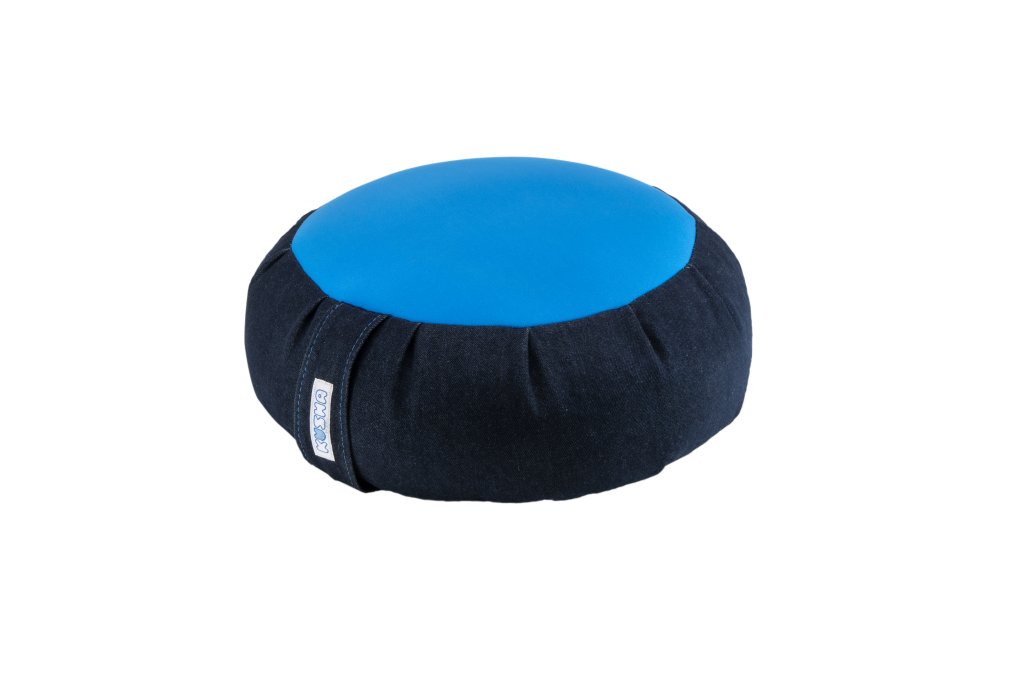
This guide from Kusha Cushions covers choosing height, shape, and filling so your cushion supports your posture for a full session, not just the opening minutes.

The difference shows up fast: a cushion that flattens by minute fifteen forces your knees above your hips, tipping the pelvis backward and rounding the lumbar spine.
The difference between soft and firm support
Soft support absorbs weight by deforming. It feels comfortable while it lasts, but as the filling compresses, your sitting height drops and your posture follows it down.
Firm support resists that compression. Buckwheat hulls shift slightly to match your body but hold their overall height, so hip elevation stays consistent from the first minute to the last.
How firmness affects hip elevation and pelvic tilt
Hip elevation is what allows a neutral pelvic tilt: when the hips sit higher than the knees, the pelvis rotates forward naturally and the lumbar curve is preserved without muscular effort.
Drop the hips and the chain reverses: pelvis tucks under, spine rounds, and the deep hip muscles tighten to compensate. Firmness keeps the hips up.
Meditation Cushion Height for Alignment: Finding Your Number
The right cushion height puts your hips slightly above your knees when you sit cross-legged or kneel. For most adults that is 4 to 6 inches, but hip flexibility and body proportions shift the number in both directions.
A practical fit test you can do before you buy
You can approximate your ideal height at home with folded blankets or firm pillows. Stack them until your knees rest at or just below your hip crease and your spine stacks without effort.
- Sit on the stack with both sit bones evenly supported
- Check that your knees are level with or lower than your hips
- Hold the position for five minutes and note any hip or knee strain
- Add or remove a layer and repeat until the position feels effortless
- Measure the final stack height: that is your target cushion height
If your hips strain even when the height is right, the issue is usually firmness, not height: a soft stack compresses under load, so the height you measure before sitting is not the height you get while sitting.
Best Meditation Cushion for Posture: What to Look For
The best meditation cushion for posture combines three things: enough height to elevate the hips, a filling that holds its shape under load, and a shape that matches your sitting position. Miss one and the cushion works against you.
Shape options: round, crescent, and rectangular
Round cushions, commonly called zafu, are the classic cross-legged option. Their circular top gives even support in every direction, which suits symmetrical sitting.
Crescent cushions support the thighs and hips, working well for wider leg postures where a round cushion leaves the outer thighs unsupported. Rectangular cushions and meditation benches suit kneeling, where support runs front to back rather than in a circle.
| Shape | Best For | Sitting Position | Support Pattern |
|---|---|---|---|
| Round (zafu) | Symmetrical sitting | Cross-legged | Even in all directions |
| Crescent | Wider leg postures | Cross-legged, wide knees | Hip and thigh support |
| Rectangular | Kneeling setups | Kneeling, bench use | Front-to-back support |
For a fuller seat, a base cushion under the main cushion spreads pressure across the knees and ankles. The Kusha Cushions Earth cushion is a 2-inch, 28 by 28 inch base filled with high-resiliency foam for exactly that job, and it pairs with the crescent-shaped Moon cushion or the taller Sun cushion as a complete seat.

Filling Materials That Hold Their Shape
Filling determines whether a cushion still supports you in month six: it sets the firmness ceiling, the weight you carry, and whether you can tune the cushion after purchase.
Here is how the common fillings actually compare on the things that matter once the cushion is in your home:
| Filling | Firmness | Adjustable? | Weight | Compression Over Time | Notes |
|---|---|---|---|---|---|
| Buckwheat hulls | Firmest | Yes, via zipper or inner liner | Heaviest | Low; hulls settle but hold loft | Shifts to match your sit bones; slight rustle |
| Kapok | Medium-soft | Sometimes | Light | Moderate; packs down with use | Plant fiber, cotton-like feel |
| Spelt hulls | Medium-firm | Yes | Light | Low to moderate | Lighter than buckwheat, similar moldability |
| Foam (high-resiliency) | Firm but uniform | No | Light | Slow; recovers between sessions | Best as a broad base layer |
Buckwheat is the firmest common option and the most adjustable: the hulls shift under your sit bones, so the cushion takes your shape rather than forcing you into its shape. The trade-offs are weight and a faint rustle when you shift, though a handle helps and the sound fades once you settle.
Foam holds a consistent surface and works well as a broad base layer under the knees and ankles, where even pressure relief matters more than moldability. The Kusha Cushions Sun cushion uses buckwheat hulls in a 6-inch-high, 15-inch-wide round seat with a handle, sitting higher than the Moon to make hip elevation easier.
How to adjust a cushion's filling at home
Adjustable fillings let you tune firmness without buying a new cushion; most buckwheat cushions have a zipper or inner liner for removing hulls.
- Remove hulls in small amounts, roughly one handful at a time
- Sit and check that your knees stay at or below hip level
- Add hulls back if the cushion feels too low or the sit bones bottom out
- Store removed hulls in a breathable bag in case you want to restore the original loft
A cushion that is too firm can be softened slightly the same way. A cushion that is too soft because the filling has compressed cannot be fixed by adjustment, which is why shape retention matters more than any single spec.
Care, durability, and replacement
Filling life and cover life are separate clocks. Buckwheat hulls hold their loft for years and can be topped up or replaced if they flatten, so check whether the maker sells refill hulls before you buy.
Covers take the daily abuse. Look for a removable, washable cover and spot-clean with mild soap and water between washes; a machine-washable cover in cold water on a gentle cycle extends the cushion's working life far more than any filling upgrade.
How to Sit Comfortably During Meditation: Troubleshooting by Body Type
Sitting discomfort usually traces to one of three causes: hips not elevated enough, a filling that has compressed, or a shape that does not match your leg position.
Here is how to read the common complaints:
- Hips ache within minutes: the cushion is too low or too soft. Add height or switch to a firmer filling.
- Knees or ankles hurt: the base is too narrow or too thin. Add a wide base cushion under the main seat.
- Lower back rounds despite effort: the hips are dropping below the knees. Increase cushion height.
- One side feels compressed: the filling has shifted or flattened. Redistribute or replace the hulls.
- Numb feet: pressure is concentrated at the ankles. A broader base spreads the load.
For larger bodies, firmness matters more, not less: a soft filling compresses further under more weight, so effective sitting height drops faster. Buckwheat holds up better under load, and a base cushion spreads pressure across a wider area.
A Buying Checklist for Online Shoppers
Buying online means you cannot sit on the cushion first, so this checklist does the work a showroom would. These items decide whether the cushion still fits you in month six, not just whether it looks right in the photos.

Fit and firmness
- Height matches your fit test result, typically 4 to 6 inches
- Filling is firm and shape-holding, such as buckwheat hulls
- Filling is adjustable so you can tune firmness later
- Shape matches your sitting position: round, crescent, or rectangular
- Dimensions are listed in inches, including height and seat width
Ownership and care
- Cover is removable and washable
- Cover material is stated (cotton, linen blend, etc.) and matches how you plan to clean it
- Refill hulls or replacement filling are available from the maker
- Materials and construction are described specifically, not just as "premium"
Purchase terms
- Return window is long enough to actually sit on the cushion for a week or two
- Return shipping cost and condition requirements are clear
- Warranty covers both cover and workmanship, and the term is stated
- Shipping time and cost are known before checkout
Care is the other half of durability. Look for stain-resistant covers that can be spot-cleaned with soap and water and machine washed in cold water on a gentle cycle. A cushion you cannot clean will not last, no matter how good the filling is.
Conclusion
Finding a cushion that holds your alignment for a full session comes down to height, firmness, and shape working together, and getting one of them wrong undoes the other two. Kusha Cushions builds posture-first meditation cushions with buckwheat hull fillings, adjustable loft, washable covers, and a lifetime guarantee on cover and workmanship, handcrafted from 30 years of professional upholstery experience. Shop The Cloud and sit with support that holds from the first minute to the last.
Frequently Asked Questions
How firm should a firm meditation cushion be?
A firm meditation cushion should support your hips without sinking more than about an inch when you sit down. Buckwheat hulls and high-resiliency foam hold their shape better than soft cotton or down. The goal is to keep your pelvis tilted slightly forward so your spine can stack naturally. If you bottom out within minutes, the cushion is too soft for long sessions.
How high should a meditation cushion be for proper alignment?
Most people need 4 to 6 inches of lift under the hips to get the knees at or below hip level. If your knees sit higher than your hips, add height. The Sun cushion measures approximately 6 inches high by 15 inches wide, while the Moon cushion is 5 inches high by 12 inches deep and 18 inches wide. Start there and adjust with a base cushion if needed.
Can a firm meditation cushion help with posture and back comfort?
Yes, when it is firm enough to elevate the hips and support a natural pelvic tilt. A stable cushion reduces the muscular effort needed to stay upright, which takes pressure off the lower back. Pair it with a base cushion like the Earth, a 2 inch high, 28 by 28 inch foam base, to support knees and ankles so your posture holds through longer sits.
How do I adjust a meditation cushion's filling?
If your cushion has a removable cover and a zippered inner liner, you can add or remove filling to change height and firmness. Buckwheat hulls are the easiest to adjust: scoop out a cup or two to lower the height, or add hulls to firm it up. Make small changes, sit for five minutes, and repeat until your hips feel level and your knees rest comfortably.